
Description
| Repeat Title: Islamic, Umayyad Caliphate, Post-Reform, AE Fals (0.6g, 9mm), Menorah type, Iliya (Jerusalem) mint, after AH 77 / AD 697 | |
| Arabic Title: إسلامي، الخلافة الأموية، مرحلة ما بعد الإصلاح، فلس برونزي، نوع المنورة، ضرب في إلياء (القدس) | |
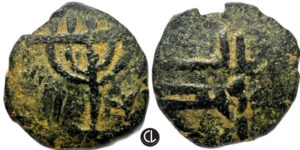
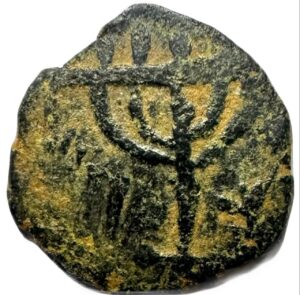
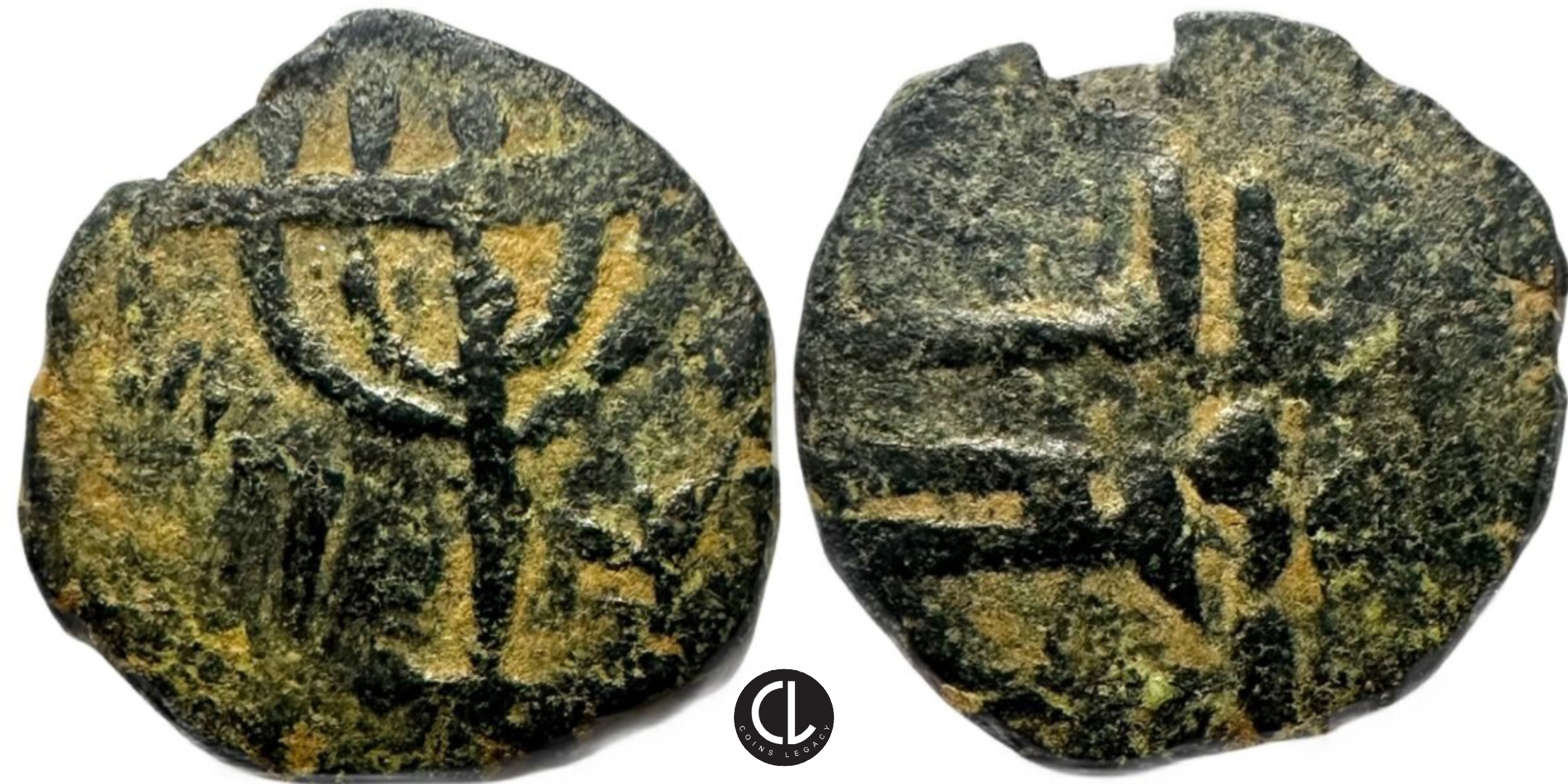
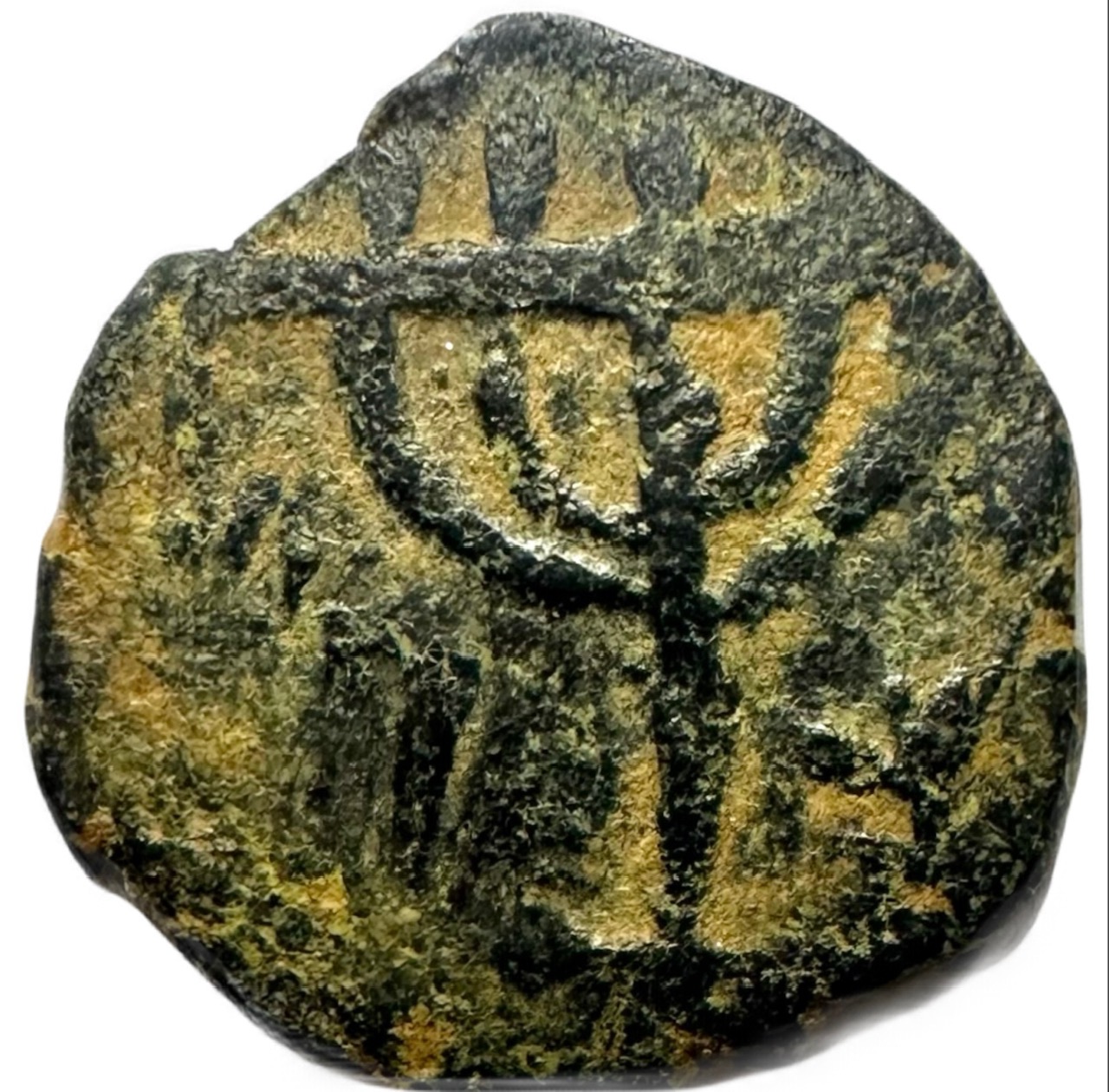
| Obv: Seven-branched (?) candelabra extending above the top platform | |
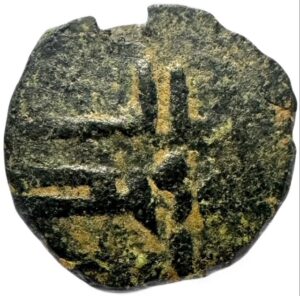
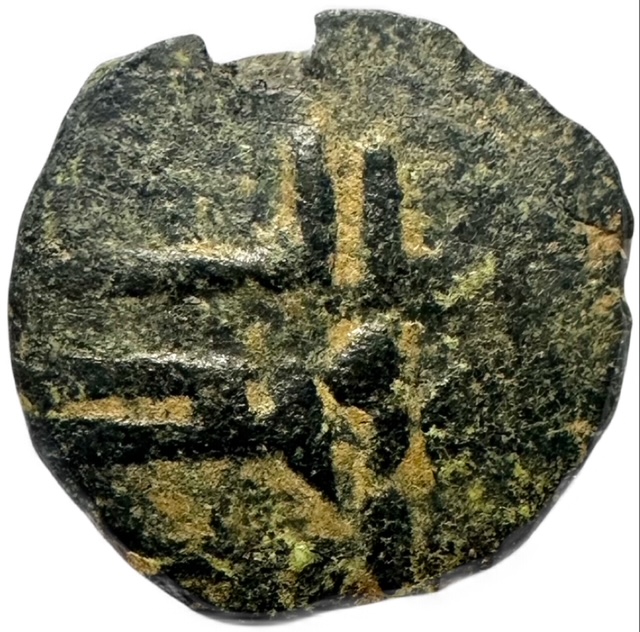
| Rev: It reads “Allah Wahdahu” (الله وحده) | |
| Ref: Unlisted in standard catalogues | Rarity/Choice: Highest Rarity, VF (beautiful earthen patina) |
| Note: The obverse displays tentatively a seven-branched menorah, a design reminiscent of the rare early Judaic tradition. Unlike some later variations of the Islamic Jewish fals, which reduce the menorah to five branches, possibly representing the Five Pillars of Islam, this coin preserves the full seven branches, with the branches extending above the top platform, an unusual feature that parallels some of the earliest rare Judaic menorah designs and it shares a similar base to the early seven-branched Islamic Jewish menorah. The reverse bears the inscription “Allah Wahdahu” (الله وحده), a testament to the coin’s early Islamic context. This coin also stands out for its exceptionally small denomination, weighing only 0.6 g, making it one of the lightest examples known.This coin likely dates to the post-reform period under Caliph ʿAbd al-Malik ibn Marwān (685–705 CE), specifically after 77 AH / 697 CE. During this period, relations between the Islamic administration and Jewish communities were estimated to be favorable. Notably, ʿAbd al-Malik is recorded to have employed a Jewish minister named Someir (The Jewish Encyclopedia, 1906). The coin’s unique design and denomination may shed light on early Islamic minting practices and the interaction between Jewish iconography and Islamic authority during this formative period.While early Islamic Jewish fals are referenced in works such as INJ 10; Walker, Arab-Byzantine 605; Album 163, this coin’s combination of seven-branched menorah, small denomination, and distinct inscriptions sets it apart. Its rarity and unrecorded status make it particularly sought after by collectors, especially those who have studied the early Islamic menorah coin series but have yet to encounter this variant. This coin may provide an opportunity for further research, offering insights into early Islamic-Jewish interactions and coinage practices.This unpublished menorah fals is not only a numismatic rarity but also a historical enigma, opening doors for future study and adding a compelling piece to any collection of early Islamic or Judaic coins. |
|


